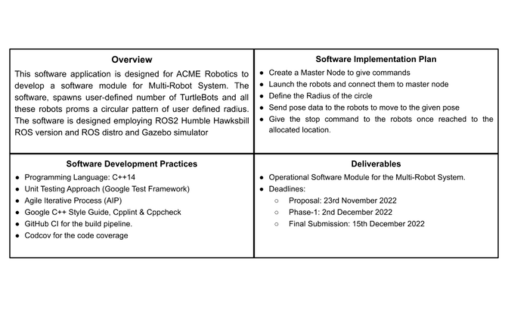
Multi-Robot Swarm System
Swarm simulation of 25 TurtleBot3 robots in Gazebo/ROS2 achieving geometric formations with 99% accuracy via a master–slave coordination algorithm. CI/CD pipelines at 89% code coverage.
I turn caffeine into software modules and fiber into robots — designing autonomy stacks across motion planning, SLAM, perception, and controls with ROS/ROS2, C++, and Python.
I'm a robotics engineer who lives at the intersection of software and hardware — equally at home writing a real-time C++ motion planner and torquing the last bolt on a robot I designed in CAD. I hold a Master of Engineering in Robotics from the University of Maryland, College Park and a B.Tech in Mechanical Engineering, a combination that lets me own the full stack: mechanism design, embedded control, and the autonomy software on top.
My work spans legged locomotion (a state-championship-winning, patented quadruped robot), swarm robotics (a 25-robot TurtleBot3 formation system in ROS2 with 99% geometric accuracy), SLAM and navigation (mapping 20,000 sqft environments, EKF sensor fusion, GPS/SLAM hybrid rovers), and deep-learning perception (YOLO-based tracking at 99 ms inference, semantic segmentation, real-time image captioning for accessibility).
As a Graduate Teaching Assistant at UMD, I mentored 95+ graduate students in computer vision and software engineering for robotics — homography, particle filters, sensor fusion, modern C++, CI/CD, and software design patterns. I care deeply about writing robot software that is tested, documented, and deployable, not just demo-ready.
From legged locomotion to swarm coordination — hardware built, software shipped, metrics measured.
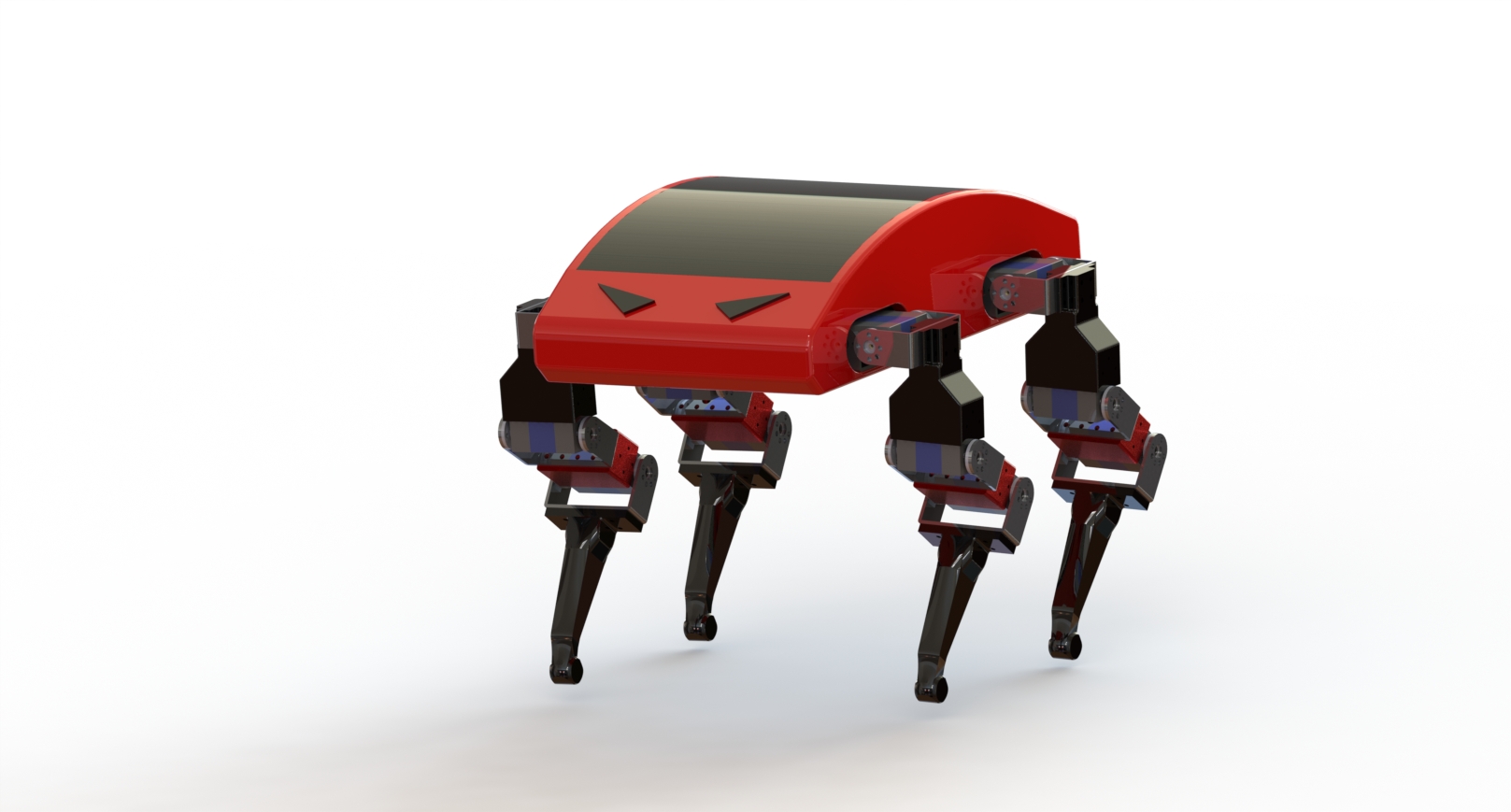
Led end-to-end design and development of a four-legged autonomous robot mimicking canine locomotion — walking, trotting, turning, and slope climbing. Designed in SolidWorks with motion analysis for gait optimization (90% accuracy vs. simulation), fabricated via 3D printing for a 40% weight reduction, and driven by multithreaded control of 12 servos on an ATmega2560 + PCA9685 over I2C, with ROS-based dynamic path planning. Won a state-level robotics championship; patent application №202221001158.
Swarm simulation of 25 TurtleBot3 robots in Gazebo/ROS2 achieving geometric formations with 99% accuracy via a master–slave coordination algorithm. CI/CD pipelines at 89% code coverage.
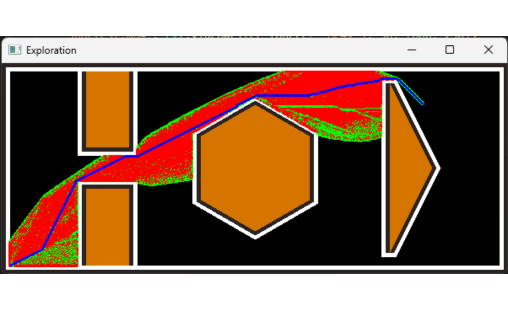
A*, Dijkstra, D*, RRT, and RRT* planners for TurtleBot3 in Gazebo, with probabilistic inference to predict dynamic obstacles — Bayesian modeling improved prediction robustness by 20%.
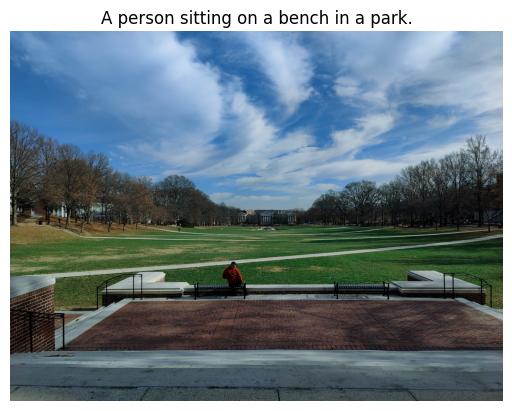
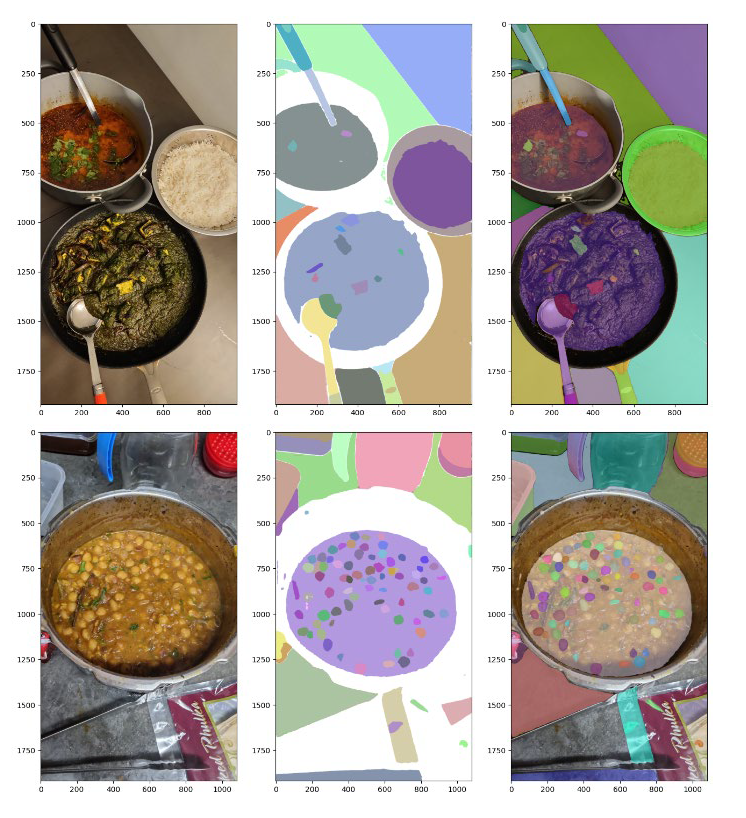
RNN-based ResNet50 + PointRend achieving 80% segmentation accuracy on live video; transfer learning reached 67% test accuracy on a 4,935-image dataset, beating a custom model's 43%.
C++ real-time human detection and tracking: YOLOv3 at 84% confidence / 99 ms inference on MS-COCO, KCF tracking across 164k images, with Travis CI + Coveralls pipelines feeding a multi-robot planner.
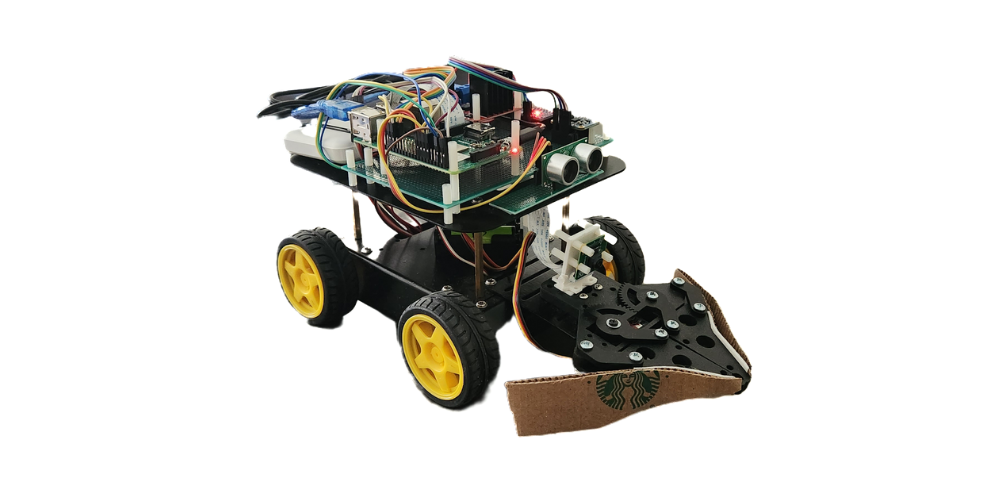
Pi Camera color detection + A* planning with MPU6050 IMU, encoders, PID control, and ultrasonic obstacle avoidance — 80% goal-placement success in dynamic environments.
Rover switching seamlessly between Gmapping SLAM (LiDAR + odometry) indoors and GPS waypoint navigation outdoors, with EKF sensor fusion minimizing drift and custom-fabricated aluminum mounts.
Monocular camera calibration, floor homography, and horizon-line estimation for waypoint following on a TurtleBot3 WafflePi, plus YOLO-based stop-sign detection across varying orientations.
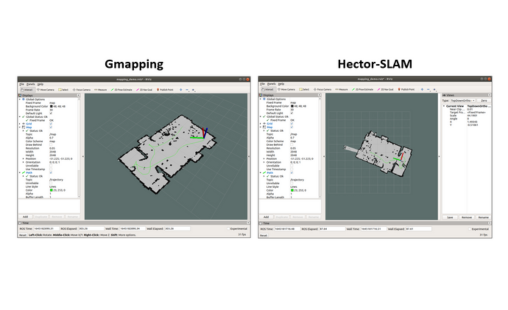
Comparative study of HectorSLAM, Cartographer, and Gmapping across a 20,000 sqft floor — Cartographer proved most accurate with 30% fewer map artifacts.
ROS2 control stack for a collaborative arm: custom Python nodes for joint control and safety, URDF kinematics in RViz2, MoveIt2 motion planning for pick-and-place, validated in Gazebo before hardware.
Dockerized Flask API managing OpenRAVE robot configurations — full CRUD over JSON robot specs with parameter validation and consistent containerized deployment.
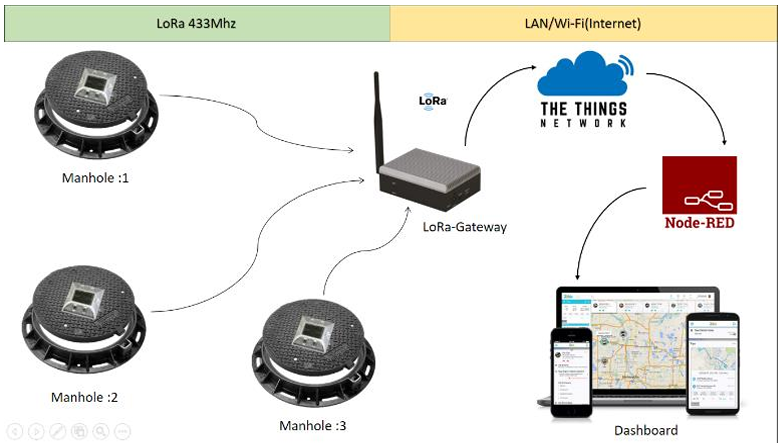
Co-invented a patented IoT system detecting abnormal spillage patterns via distributed sensors, streaming real-time alerts to a centralized monitoring platform. Published in IOP Journal of Physics.
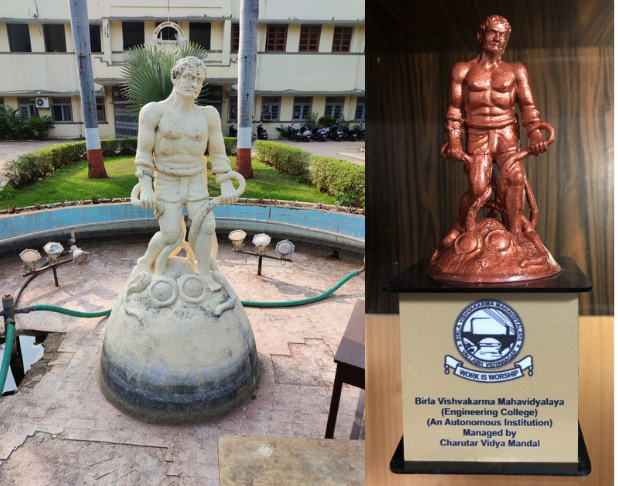
Led 3D scanning of an 11 ft statue to a 98% accurate CAD model via Fusion 360 reverse engineering, then optimized FDM printing to produce 1000+ miniatures at 50% lower production cost.
Application №202221001158 · The Patent Office Journal No. 11-2022, March 2022.
IOP Conference Series: Journal of Physics — co-inventor of the patented system. read paper ↗
Whether it's autonomous systems, motion planning, perception — or a robot that needs both a mechanical fix and a software one — my inbox is open. Let's build the future, one robot at a time.